

In an effort to strengthen the understanding of modern science at the secondary education level, a community service team from the Laboratory of Ecology and Biosystematics, Department of Biology, Faculty of Science and Mathematics (FSM), Diponegoro University (UNDIP), held an educational event at SMA Negeri 3 Semarang on Wednesday (25/02/2026). The program was titled “Introduction to Molecular-Based Tropical Biodiversity Identification Methods.”
This initiative is a concrete manifestation of the “Tri Dharma Perguruan Tinggi” (the Three Pillars of Higher Education). Through this program, academics are committed to transferring cutting-edge laboratory knowledge directly to the community, particularly to the younger generation who will lead future research in Indonesia.
The session was led by Ni Kadek Dita Cahyani, Ph.D., a molecular biology expert from UNDIP, along with a team of experts including Dr. Fuad Muhammad, S.Si., M.Si., Prof. Drs. Sapto Purnomo Putro, M.Si, Ph.D., and Hernanda Afra Haniyyah, M.Si. The core material focused on Environmental DNA (eDNA), a revolutionary technique that identifies organisms through genetic traces left in the environment, such as water or sediment.
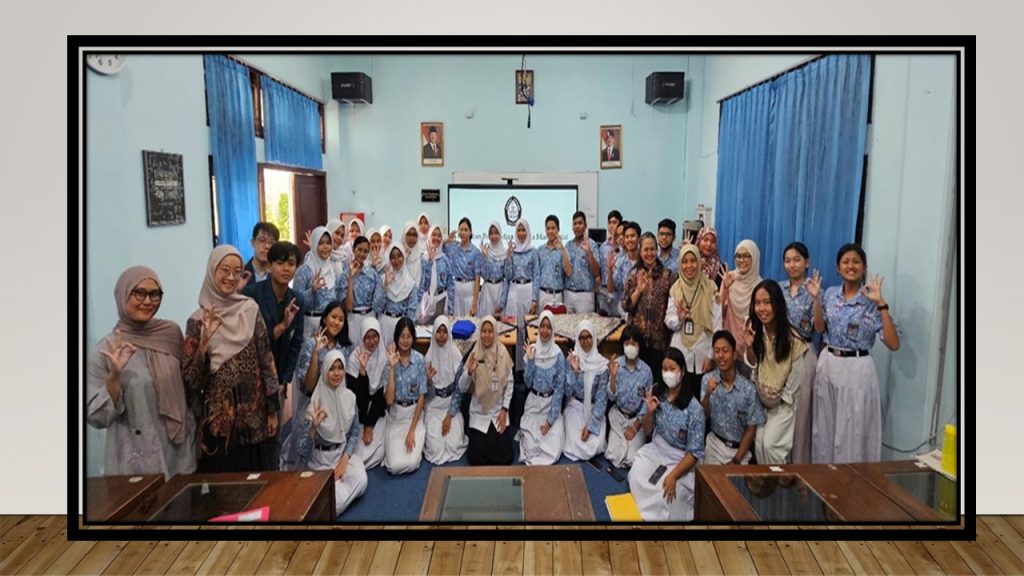
“The eDNA method has immense potential for monitoring biodiversity in tropical regions efficiently and non-invasively. We can detect species presence without the need to capture or physically disturb the organisms,” explained Ni Kadek Dita Cahyani during her presentation.
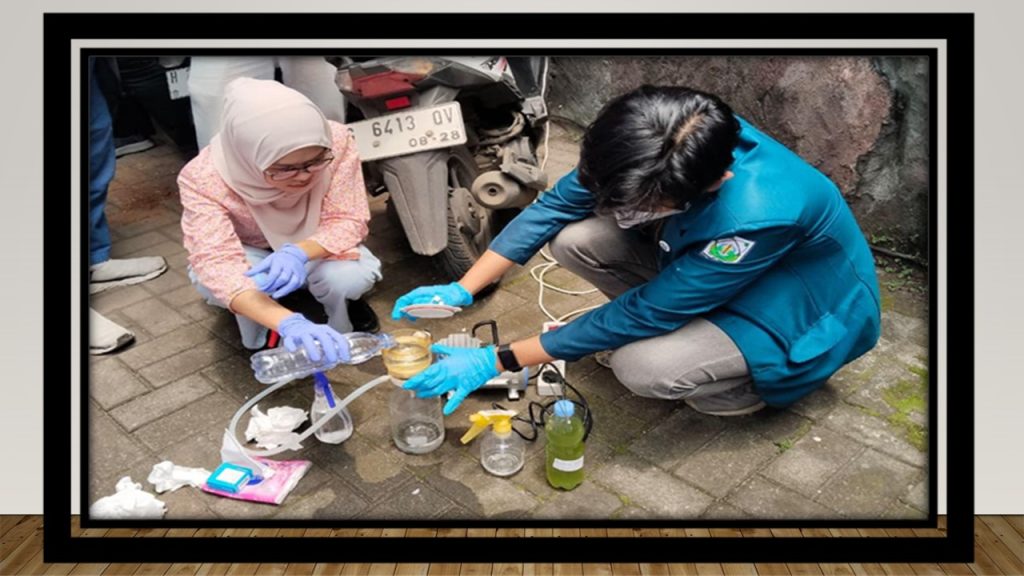
Students received more than just theoretical knowledge about DNA basics; they also participated in a hands-on simulation of water filtration. This practical session demonstrated how environmental samples can be processed into valuable genetic data to reveal the presence of species that are often difficult to observe visually.
Interestingly, this synergy is not a new development. The collaboration between the UNDIP team and SMA Negeri 3 Semarang began in 2025 through collaborative research involving students from the school. This long-term relationship serves as a strong foundation for building an inclusive research ecosystem between universities and high schools.
Through this activity, the UNDIP Community Service Team hopes to demystify molecular methods, proving they are not exclusive to higher education. Early exposure is expected to ignite students’ passion for biology and conservation in Indonesia, one of the world’s most megadiverse countries. This knowledge is envisioned as a stepping stone for students to develop scientific research for the benefit of environmental sustainability.